Simulation Training
Simulation Training
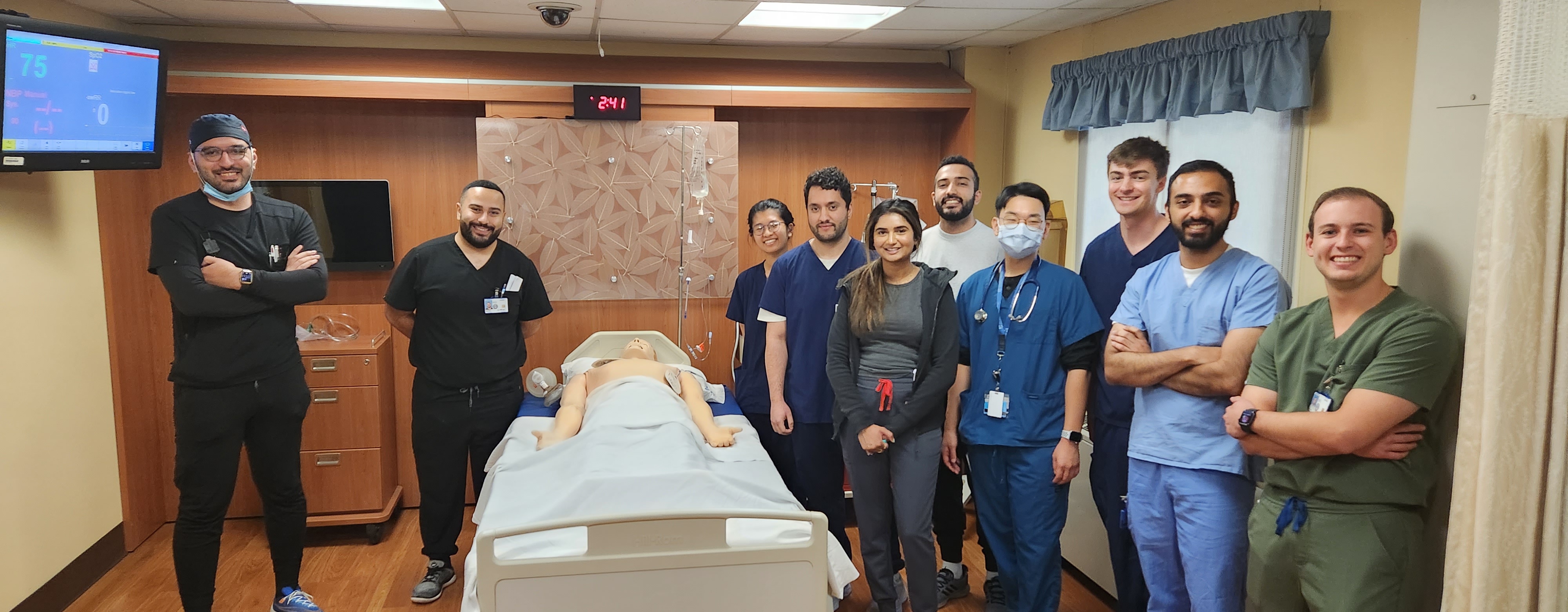
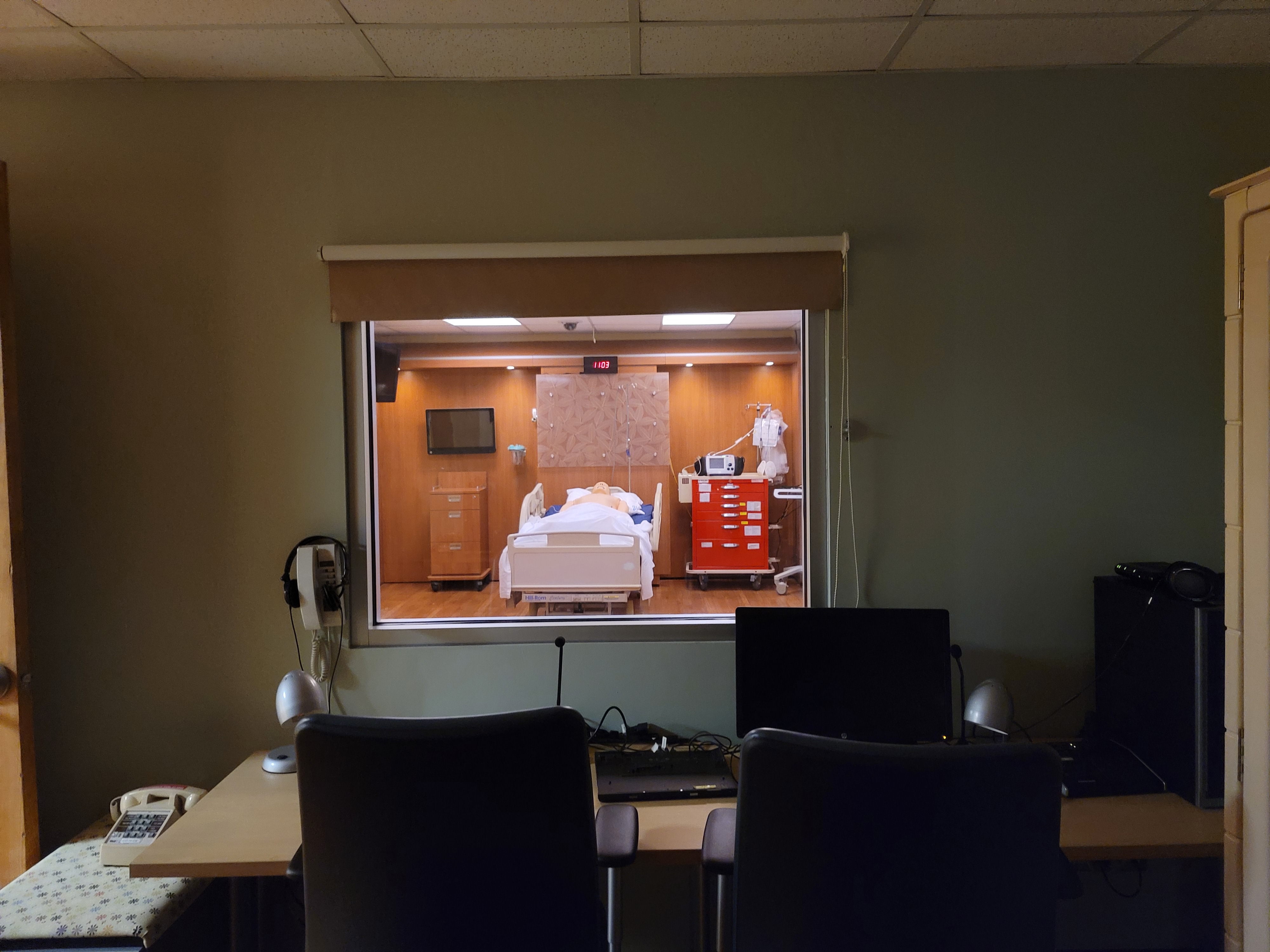
Our innovative Simulation curriculum allows for residents of all levels to gain hands-on experience in Codes and Early Response scenarios, as well as enhance proficiency in a variety of procedures. Our state of the art “Simulation Labs” at Cooperman Barnabas Medical Center and the VA mimic real life patient encounters, allowing for residents to work autonomously while being mentored and supervised in a controlled clinical environment. This type of unique, academic atmosphere grants learners a chance to receive tips and feedback on high-stress clinical scenarios while being in the safe space of the Sim Lab.
As part of this Simulation curriculum, residents have dedicated time allotted for them to complete at least 5 mandatory simulation exercises each year. Additionally, Chief Residents hold “open simulation hours” each week for residents desiring further practice. Residents also have dedicated time to explore the various procedures they will be expected to complete during their residency training. These procedures include ultrasound guided central lines, thoracentesis, paracentesis, arterial lines, intraosseous lines, lumbar punctures, intubations, arthrocentesis and many more.


Point of Care Ultrasound (POCUS)
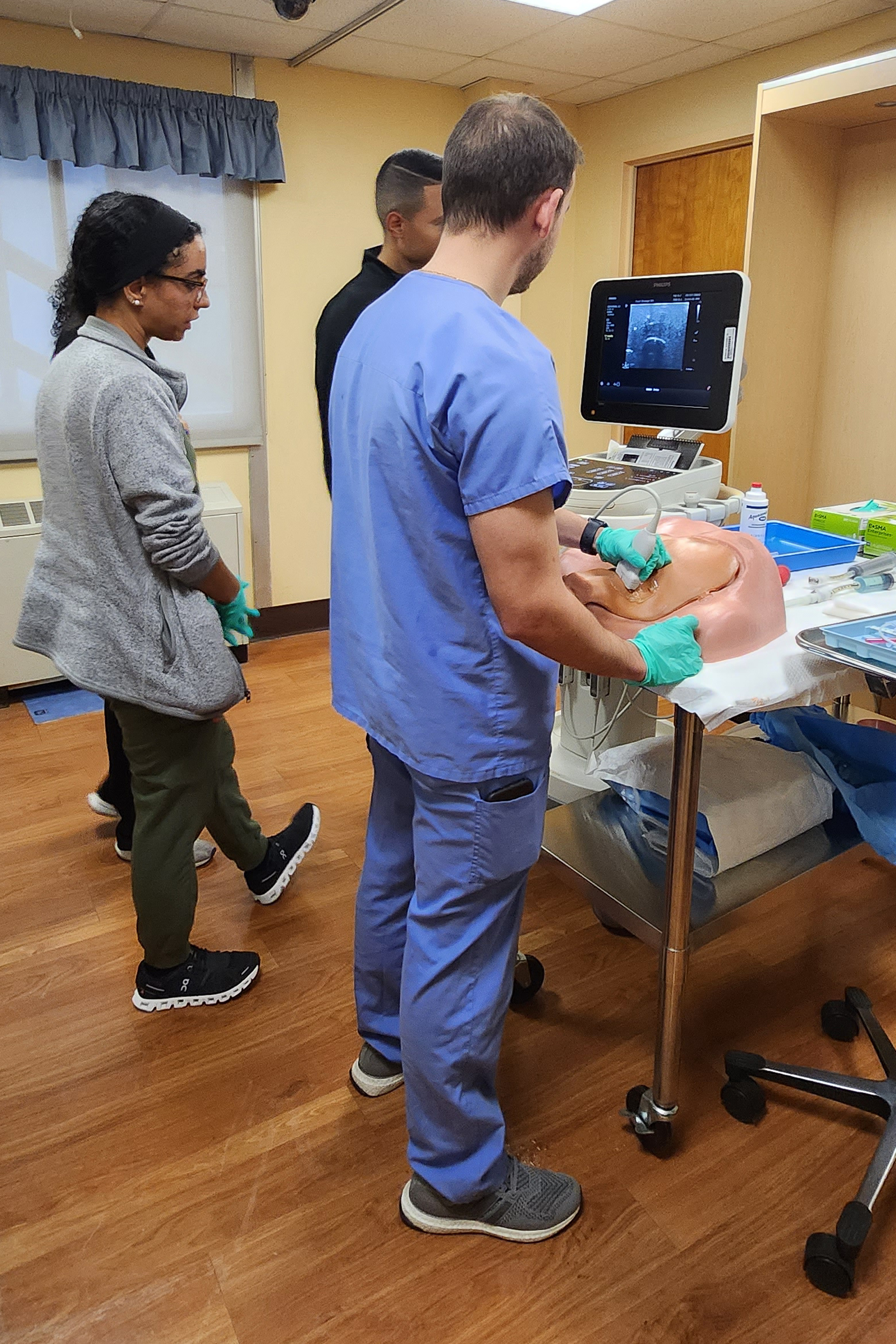
All residents are taught the basics of POCUS during inpatient floor and ICU rotations, especially at University Hospital (UH). Use of POCUS is integrated within bedside rounds, and all bedside procedures performed are under ultrasound guidance. With the acquisition of new portable equipment in 2026, each UH floor team is designated a probe to take on rounds, where clinical assessment and bedside learning are amplified through ultrasound.
In addition to these bedside ultrasound learning experiences, residents also receive hands-on workshops, lectures, simulation training, and image review sessions in the classroom. Residents also have the option to complete intensive POCUS courses, sponsored by NJMS faculty every year. Still yet, Drs. Miller and Matassa run a 2-week procedure elective at UH, which incorporates structured POCUS learning into the curriculum. POCUS is on the national forefront of clinical education, and Rutgers NJMS is exciting to be leading the charge!
Throughout their residency training, residents will also benefit from both observing and participating in interdisciplinary code blue training in which they can hone their BLS and ACLS training, as well as review videos of their own performance to improve.
We hold a yearly Procedure Night at the start of the academic year in which interns can learn directly from senior residents and Chiefs to gain exposure to procedural processes and supplies. The entire simulation curriculum has been created to ensure that all of our residents achieve mastery through rigorous assessment and practical experience.